

Detection Engineering
Detection Engineering
Detections your team owns. Logic your AI can improve.
Detections your team owns.
Logic your AI can improve.
Detections your team owns. Logic your AI can improve.
Every rule is readable, version-controlled, and modifiable by AI.
Every rule is readable, version-controlled, and modifiable by AI.
Trusted by top security teams






Ship new rules faster. Describe a threat in plain language and get a production-ready Python detection in minutes.
Ship new rules faster. Describe a threat in plain language and get a production-ready Python detection in minutes.

Engineering-Grade Workflows. Because detections are Python, your team can read, test, and improve every rule — and so can AI.
Engineering-Grade Workflows. Because detections are Python, your team can read, test, and improve every rule — and so can AI.

Coverage beyond your rules. Continuously hunt across your data lake for threats your rules haven't been written for yet.
Coverage beyond your rules. Continuously hunt across your data lake for threats your rules haven't been written for yet.
Built for detection engineers. Amplified with AI.
AI Detection Builder
Closed-Loop Tuning
GitHub PR Workflow
MITRE ATT&CK Coverage Mapping
Pre-built Detection Library
Real-time Testing
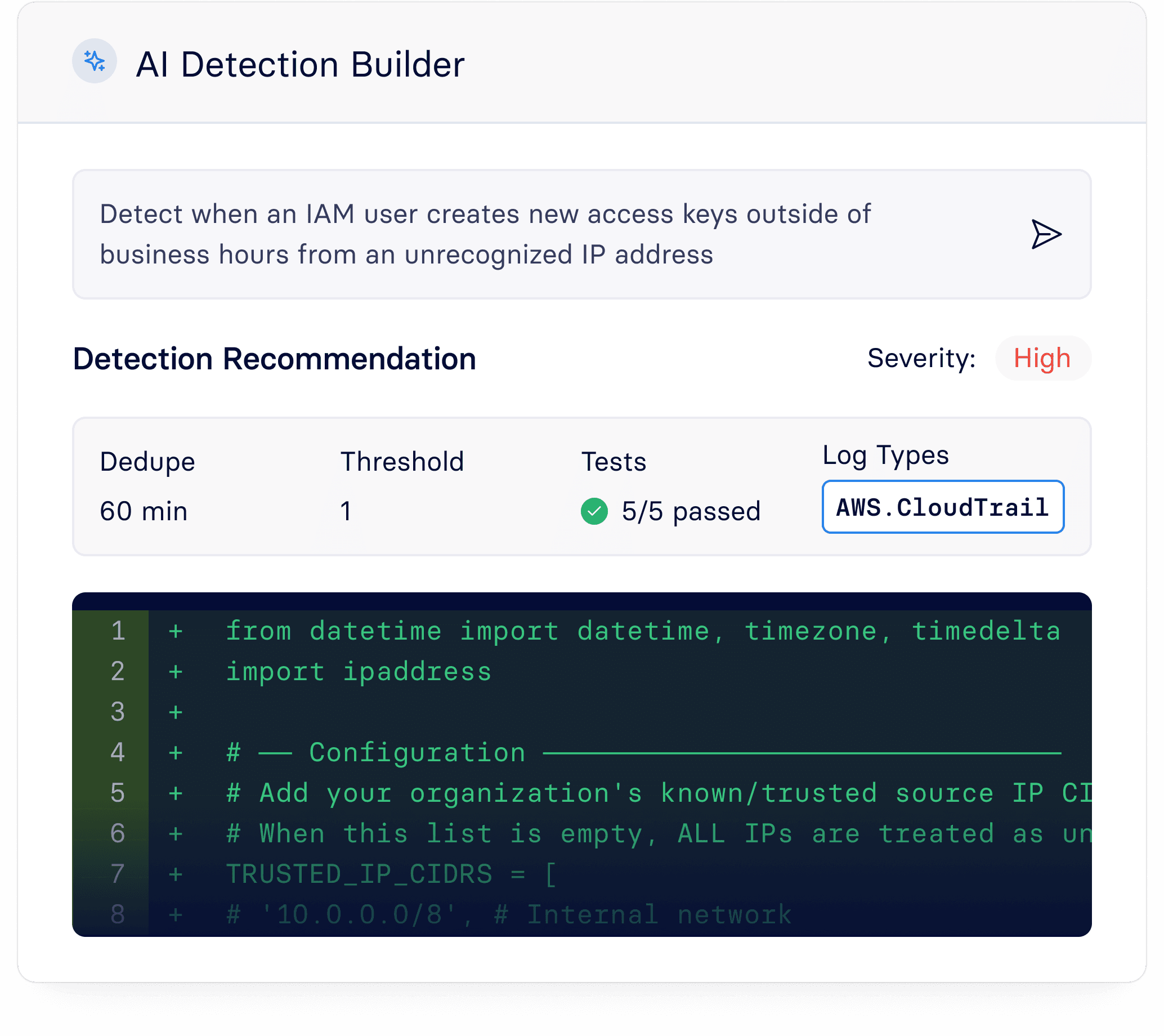
AI Detection Builder
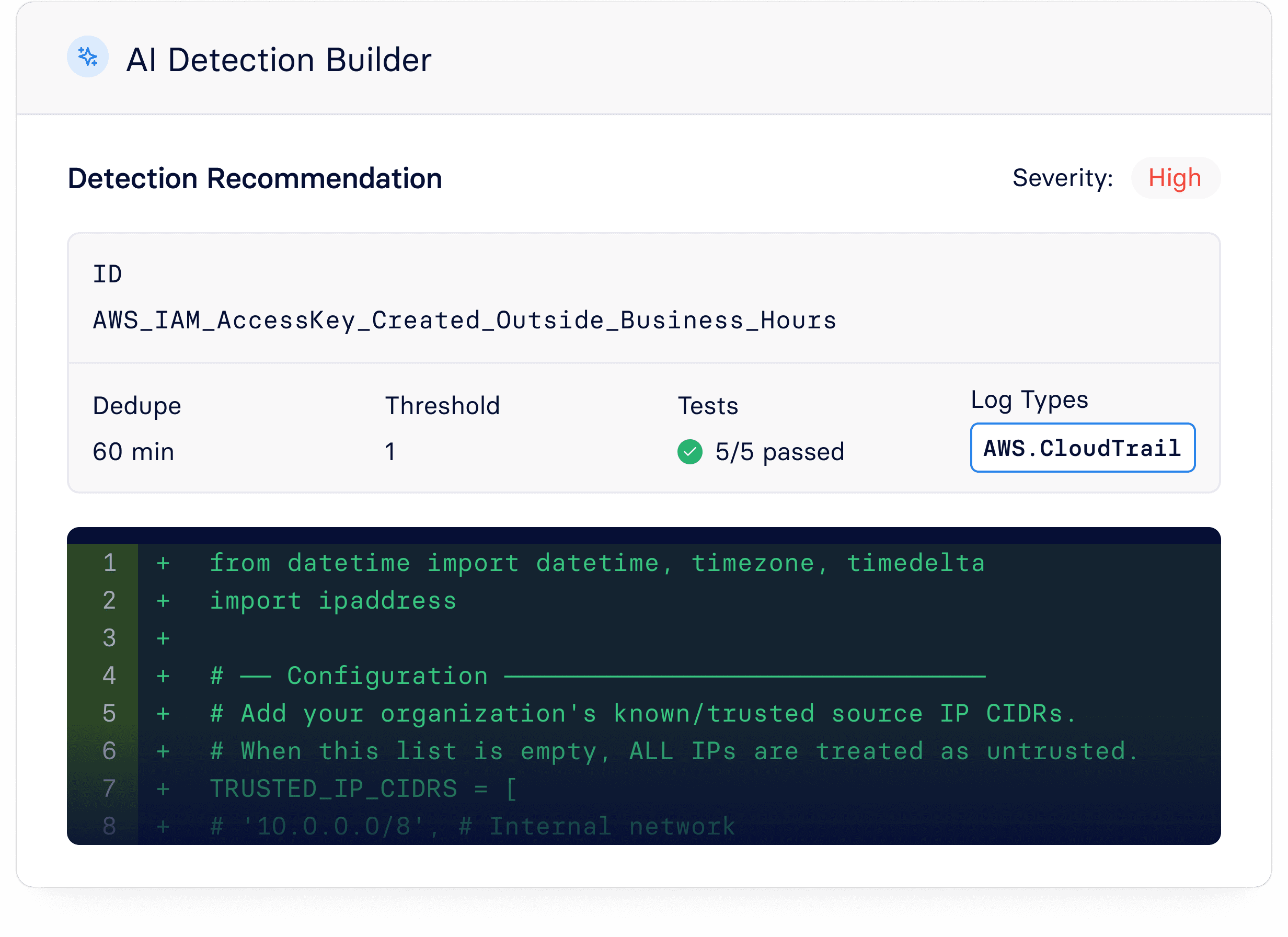
Describe a threat in plain language and get a production-ready Python detection — ready to deploy, tune, and test from day one.

Built for detection engineers. Amplified with AI.
AI Detection Builder
Describe a threat in plain language and get a production-ready Python detection — ready to deploy, tune, and test from day one.
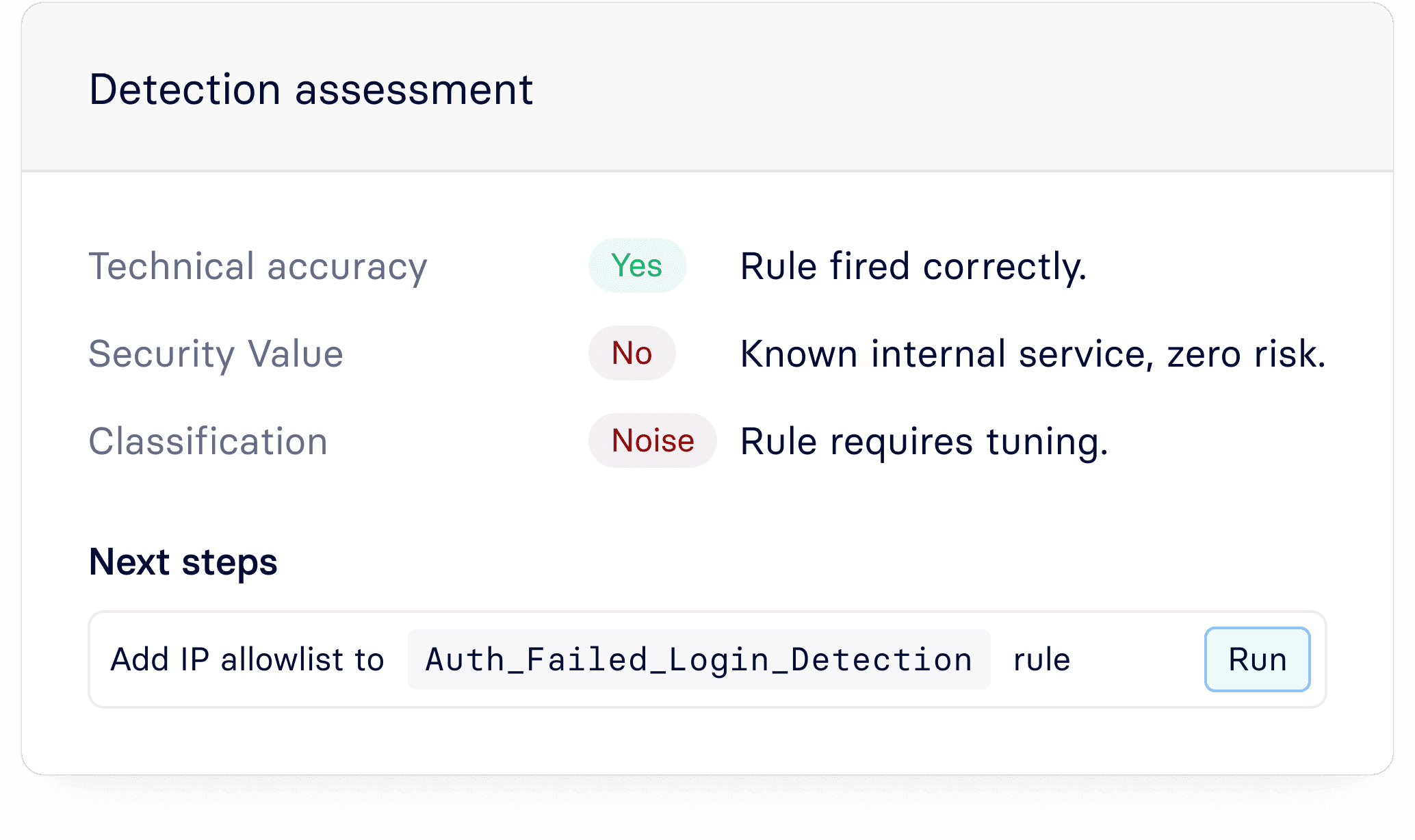
Closed-Loop Tuning
Every false positive traces back to the exact rule that fired and proposes a fix — so the same noise never comes back.

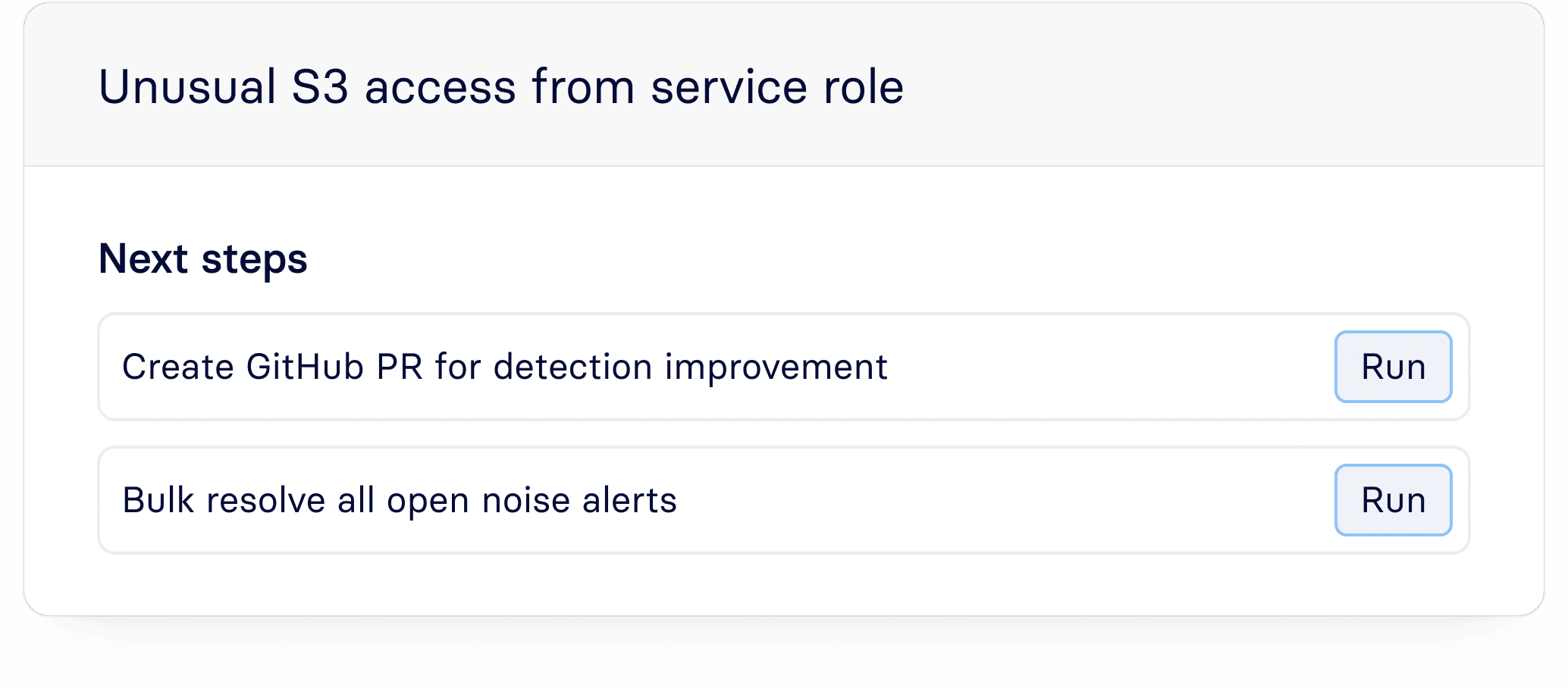
GitHub PR Workflow
AI proposes detection improvements through your existing GitHub workflow — unit tests and reasoning included. Nothing deploys without human approval.

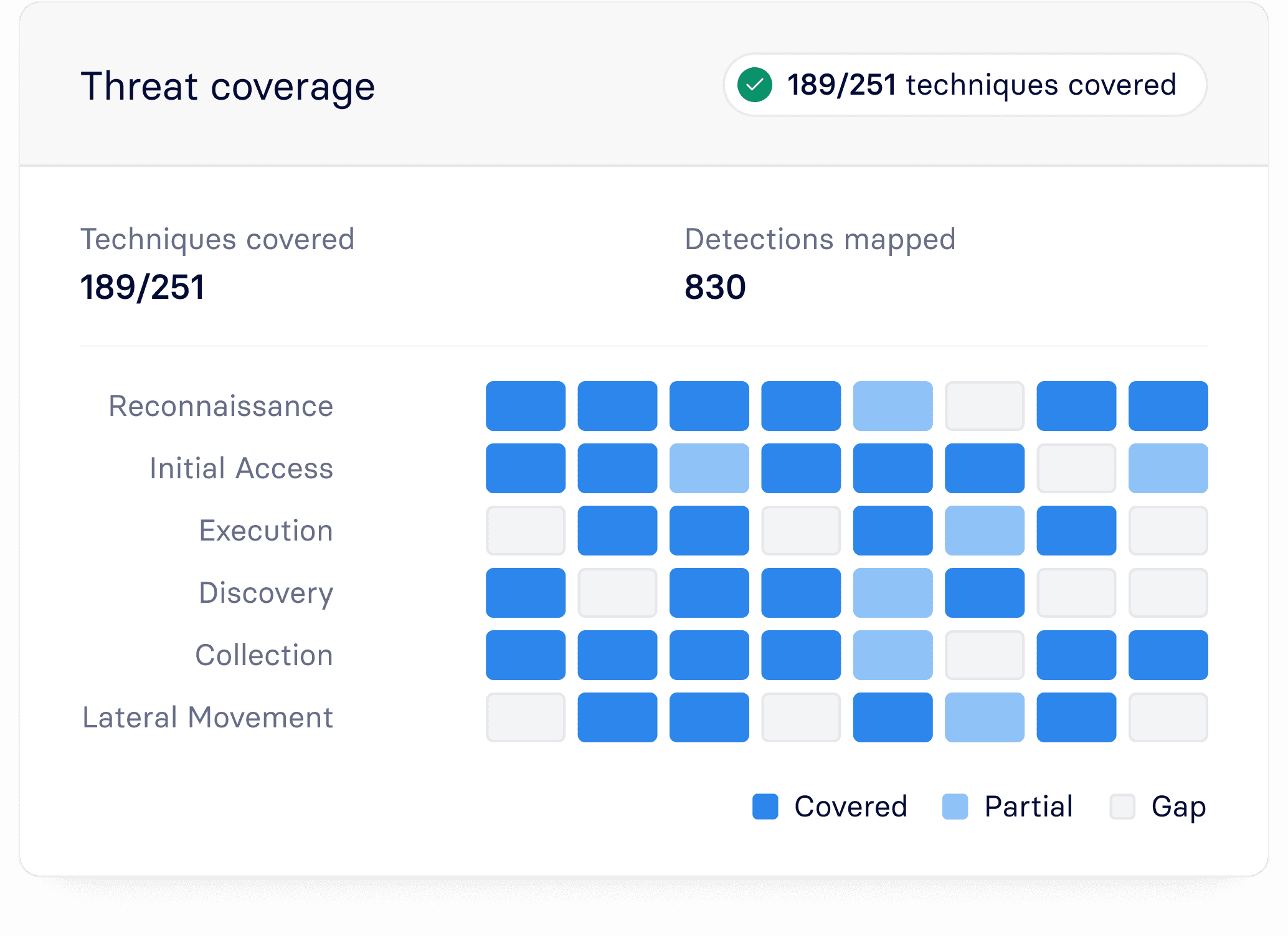
MITRE ATT&CK Coverage Mapping
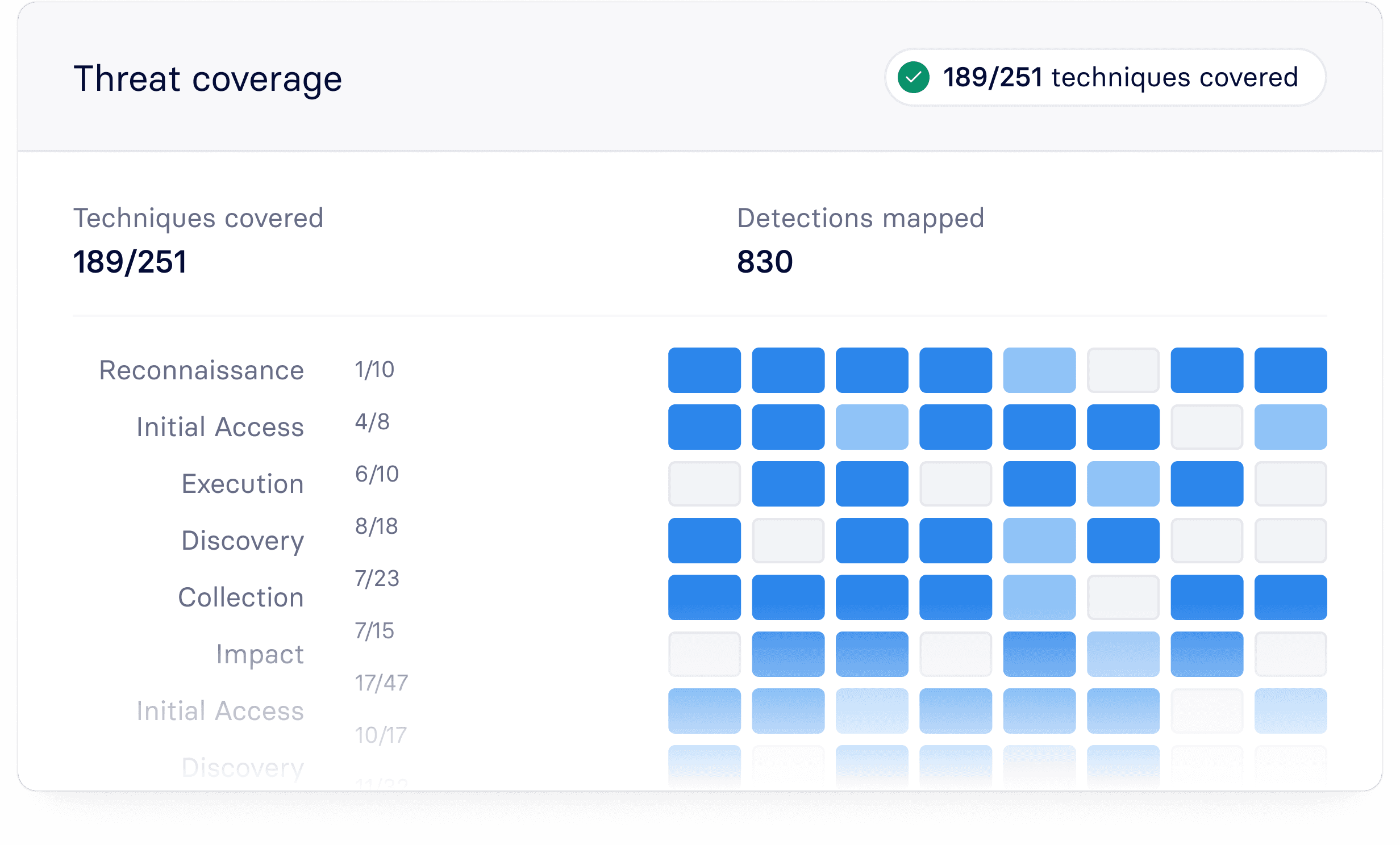
See exactly what you're covering and where your gaps are — updated continuously as your detection library grows.

Pre-built Detection Library
Start with 300+ detections built for real-world threats — ready to deploy, tune, and extend from day one.
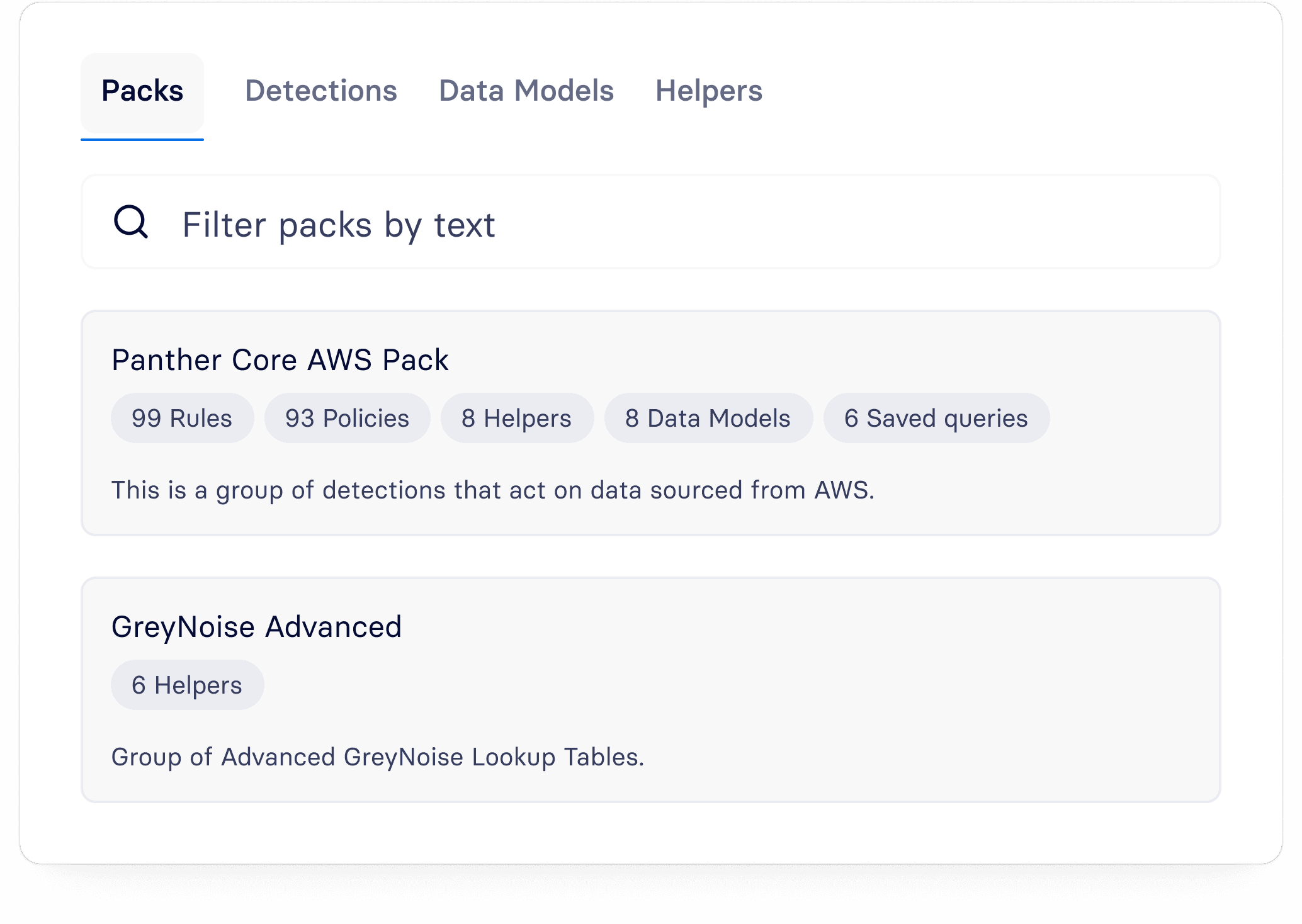

Real-time Testing
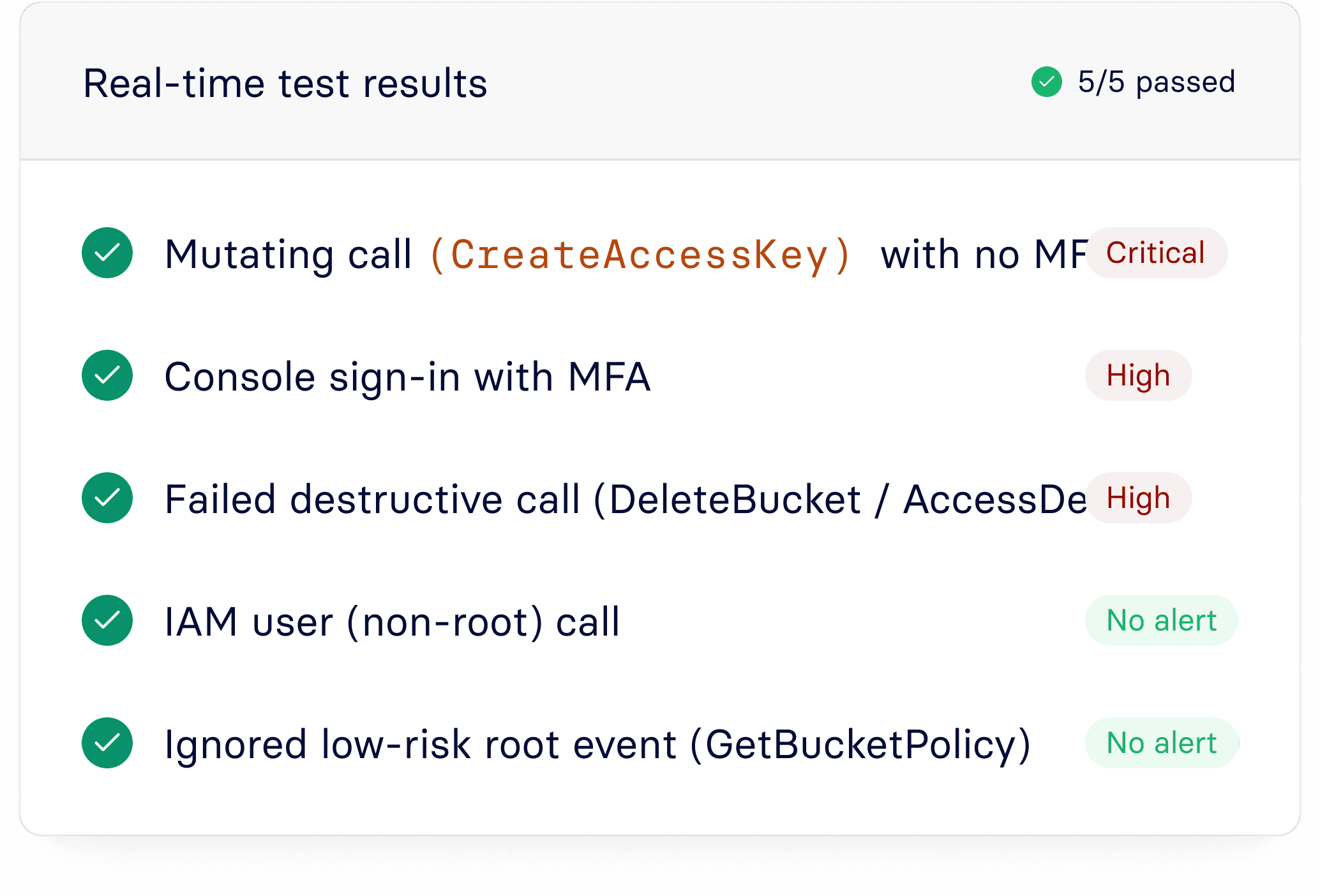
Test detections against live data before they ship — so every rule goes to production with confidence.
Built for detection engineers. Amplified with AI.
AI Detection Builder
Closed-Loop Tuning
GitHub PR Workflow
MITRE ATT&CK Coverage Mapping
Pre-built Detection Library
Real-time Testing
AI Detection Builder
Describe a threat in plain language and get a production-ready Python detection — ready to deploy, tune, and test from day one.
Built for detection engineers. Amplified with AI.
AI Detection Builder
Describe a threat in plain language and get a production-ready Python detection — ready to deploy, tune, and test from day one.
Closed-Loop Tuning
Every false positive traces back to the exact rule that fired and proposes a fix — so the same noise never comes back.
GitHub PR Workflow
AI proposes detection improvements through your existing GitHub workflow — unit tests and reasoning included. Nothing deploys without human approval.
MITRE ATT&CK Coverage Mapping
See exactly what you're covering and where your gaps are — updated continuously as your detection library grows.
Pre-built Detection Library
Start with 300+ detections built for real-world threats — ready to deploy, tune, and extend from day one.
Real-time Testing
Test detections against live data before they ship — so every rule goes to production with confidence.
Detection Velocity
Coverage for emerging threats, shipped in minutes not sprints.
Turn a natural language threat description into a complete Python detection — filters, severity logic, and test cases included — so your detection library keeps pace with the threat landscape.

No Black Boxes
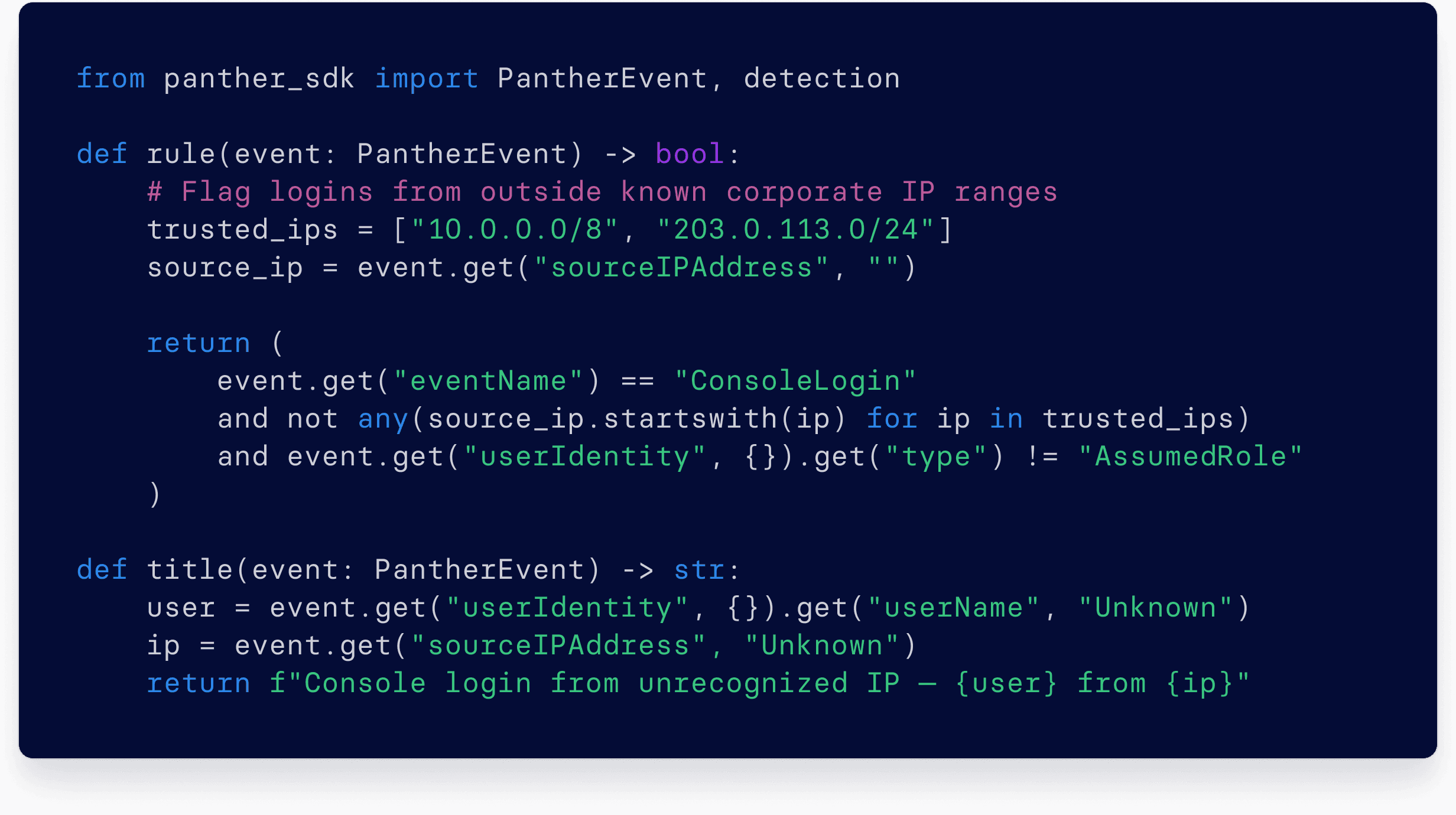
Your detection logic has nothing to hide.
Because detections are written in Python, your team can audit, modify, and improve every rule directly — no vendor tickets, no proprietary constraints, no logic you can't inspect.

Closed-Loop Detection
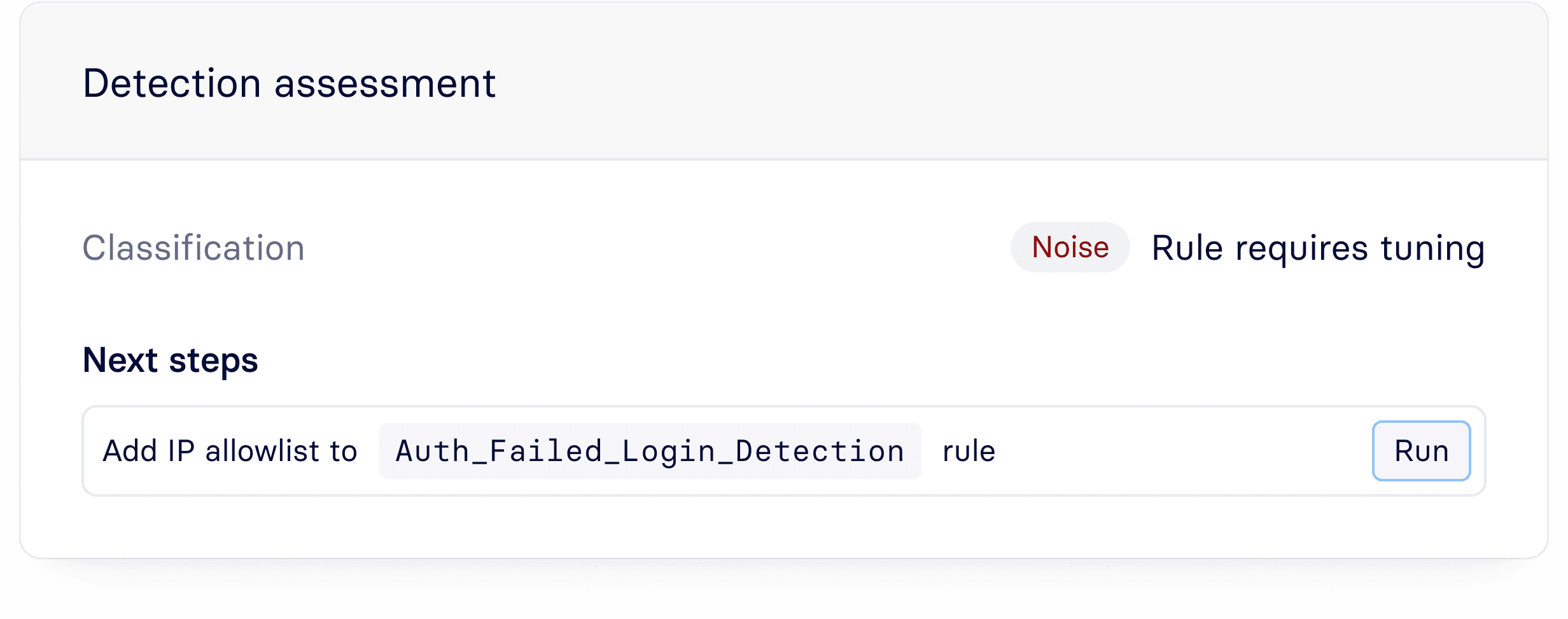
Every false positive makes your detection program stronger.
Every triage outcome traces back to the rule that fired it. Panther identifies the source detection and proposes a fix, so the same false positive doesn't come back.

Defensible Coverage
Proven enterprise-level maturity.
Provide security leaders with continuous visibility into detection coverage and program performance, so every conversation with auditors, customers, and the board starts from a position of confidence.

Infoblox tunes detections
70% faster with Panther. That's detection engineering, amplified.
Infoblox tunes detections 70% faster with Panther. That's detection engineering, amplified.

Proof from teams
who’ve been there.
Proof from teams
who’ve been there.


85%
Reduction
in false positives
85%
Reduction
in false positives


10 min
Detection creation
instead of 4–5 hours
10 min
Detection creation
instead of 4–5 hours

80%
Reduction
in high-severity alerts
80%
Reduction
in high-severity alerts
Learn more about Panther
Learn more about Panther



More Panther solutions


Cloud Security Posture
Cloud security findings paired with detection and response, unified in one security operations workflow.


Detecting Engineering
Detections your team owns. Logic your AI can improve.


Threat Hunting
Most teams only see what their alerts show them. Panther lets your team go looking for everything else.


AI SOC Transformation
Panther embeds AI agents across your SOC, multiplying what your team can see, investigate, and respond to.


Compliance & Reporting
Automatically generated evidence and audit trails prove your security program compliance, continuously.


Managed Service Providers
Get the coverage of a mature enterprise SOC through a partner who runs Panther on your behalf.
More Panther solutions
Cloud Security Posture
Cloud security findings paired with detection and response, unified in one security operations workflow.
Detecting Engineering
Detections your team owns. Logic your AI can improve.
Threat Hunting
Most teams only see what their alerts show them. Panther lets your team go looking for everything else.
AI SOC Transformation
Panther embeds AI agents across your SOC, multiplying what your team can see, investigate, and respond to.
Compliance & Reporting
Automatically generated evidence and audit trails prove your security program compliance, continuously.
Managed Service Providers
Get the coverage of a mature enterprise SOC through a partner who runs Panther on your behalf.
More Panther solutions
Cloud Security Posture
Cloud security findings paired with detection and response, unified in one security operations workflow.
Detecting Engineering
Detections your team owns. Logic your AI can improve.
Threat Hunting
Most teams only see what their alerts show them. Panther lets your team go looking for everything else.
AI SOC Transformation
Panther embeds AI agents across your SOC, multiplying what your team can see, investigate, and respond to.
Compliance & Reporting
Automatically generated evidence and audit trails prove your security program compliance, continuously.
Managed Service Providers
Get the coverage of a mature enterprise SOC through a partner who runs Panther on your behalf.
More Panther solutions
Cloud Security Posture
Cloud security findings paired with detection and response, unified in one security operations workflow.
Detecting Engineering
Detections your team owns. Logic your AI can improve.
Threat Hunting
Most teams only see what their alerts show them. Panther lets your team go looking for everything else.
AI SOC Transformation
Panther embeds AI agents across your SOC, multiplying what your team can see, investigate, and respond to.
Compliance & Reporting
Automatically generated evidence and audit trails prove your security program compliance, continuously.
Managed Service Providers
Get the coverage of a mature enterprise SOC through a partner who runs Panther on your behalf.

Frequently asked questions
How does MITRE ATT&CK coverage mapping help security leaders communicate program maturity?
The MITRE ATT&CK framework catalogs known adversary tactics and techniques. Mapping your active detections to it produces a visual picture of which techniques you can detect and which parts of the matrix are uncovered. For security leaders, this turns a subjective conversation about detection quality into a defensible, evidence-based one. It also surfaces prioritization decisions: which gaps carry the most risk for your environment, and which techniques are worth investing in next. Panther updates the coverage map continuously as the detection library grows, so it reflects the current state of the program rather than a point-in-time snapshot.
How does MITRE ATT&CK coverage mapping help security leaders communicate program maturity?
The MITRE ATT&CK framework catalogs known adversary tactics and techniques. Mapping your active detections to it produces a visual picture of which techniques you can detect and which parts of the matrix are uncovered. For security leaders, this turns a subjective conversation about detection quality into a defensible, evidence-based one. It also surfaces prioritization decisions: which gaps carry the most risk for your environment, and which techniques are worth investing in next. Panther updates the coverage map continuously as the detection library grows, so it reflects the current state of the program rather than a point-in-time snapshot.
How does Panther's pre-built detection library work, and can teams customize it?
Panther ships with 300+ detections covering common attack patterns across cloud infrastructure, identity providers, endpoints, and SaaS applications. Each one is a Python rule stored in your detection library, so it can be read, modified, extended, or replaced by your team directly. Teams typically deploy the pre-built library as a starting point, tune the rules that generate noise in their specific environment, and build custom detections on top for risks unique to their architecture. Loglass achieved an 80% reduction in high-severity alerts within a month of deploying and tuning the library.
How does Panther's pre-built detection library work, and can teams customize it?
Panther ships with 300+ detections covering common attack patterns across cloud infrastructure, identity providers, endpoints, and SaaS applications. Each one is a Python rule stored in your detection library, so it can be read, modified, extended, or replaced by your team directly. Teams typically deploy the pre-built library as a starting point, tune the rules that generate noise in their specific environment, and build custom detections on top for risks unique to their architecture. Loglass achieved an 80% reduction in high-severity alerts within a month of deploying and tuning the library.
What does it mean to own your detection logic, and why does it matter?
When detections live in proprietary vendor systems, your team can see what fires but not always why, and modifying logic often means filing a support ticket or navigating a GUI with limited expressiveness. Panther detections are written in Python stored in your GitHub repository, so your team has full visibility into every rule, full ability to modify it, and full control over what deploys and when. That ownership also matters for AI: because the logic is structured code, AI agents can read why an alert fired and write a precise fix rather than a generic recommendation.
What does it mean to own your detection logic, and why does it matter?
When detections live in proprietary vendor systems, your team can see what fires but not always why, and modifying logic often means filing a support ticket or navigating a GUI with limited expressiveness. Panther detections are written in Python stored in your GitHub repository, so your team has full visibility into every rule, full ability to modify it, and full control over what deploys and when. That ownership also matters for AI: because the logic is structured code, AI agents can read why an alert fired and write a precise fix rather than a generic recommendation.
How does Panther handle the false positive problem without requiring manual tuning cycles?
When an alert resolves as a false positive, Panther traces the outcome to the specific rule that generated it and evaluates whether the detection logic can be refined. If it can, a fix is proposed as a GitHub pull request with a plain-language explanation, a diff, and test coverage. The engineer reviews and approves it. The same false positive stops recurring. Docker achieved an 85% reduction in false positives through this loop, and Infoblox cut detection tuning time by 70% — outcomes that aren't achievable when tuning requires manual identification, manual code changes, and manual deployment cycles.
How does Panther handle the false positive problem without requiring manual tuning cycles?
When an alert resolves as a false positive, Panther traces the outcome to the specific rule that generated it and evaluates whether the detection logic can be refined. If it can, a fix is proposed as a GitHub pull request with a plain-language explanation, a diff, and test coverage. The engineer reviews and approves it. The same false positive stops recurring. Docker achieved an 85% reduction in false positives through this loop, and Infoblox cut detection tuning time by 70% — outcomes that aren't achievable when tuning requires manual identification, manual code changes, and manual deployment cycles.
How does Panther help detection engineers ship new coverage faster?
Describe a threat scenario or known TTP in natural language and Panther generates a complete Python detection with filters, dynamic severity logic, and unit tests. Tealium reduced detection creation time from 4 to 5 hours per rule down to 10 minutes using this workflow. The output is reviewable code your team can modify before it deploys — not a configuration you can't inspect. That means detection engineers can respond to emerging threats the same day rather than queuing work for the next sprint.
How does Panther help detection engineers ship new coverage faster?
Describe a threat scenario or known TTP in natural language and Panther generates a complete Python detection with filters, dynamic severity logic, and unit tests. Tealium reduced detection creation time from 4 to 5 hours per rule down to 10 minutes using this workflow. The output is reviewable code your team can modify before it deploys — not a configuration you can't inspect. That means detection engineers can respond to emerging threats the same day rather than queuing work for the next sprint.
What causes detection programs to fall behind, and why is it hard to catch up?
Detection backlogs compound. Writing a new rule takes time, testing takes time, and tuning takes time — meanwhile new threats emerge, the environment changes, and false positives accumulate in the queue. Most detection engineers spend the majority of their time maintaining existing rules rather than building new coverage. The backlog grows because the cost of each addition is high and the feedback loop for knowing what to fix is slow. Teams using manual workflows consistently report that detection quality degrades over time rather than improving, because there's no mechanism for triage outcomes to feed back into the rules that generated them.
What causes detection programs to fall behind, and why is it hard to catch up?
Detection backlogs compound. Writing a new rule takes time, testing takes time, and tuning takes time — meanwhile new threats emerge, the environment changes, and false positives accumulate in the queue. Most detection engineers spend the majority of their time maintaining existing rules rather than building new coverage. The backlog grows because the cost of each addition is high and the feedback loop for knowing what to fix is slow. Teams using manual workflows consistently report that detection quality degrades over time rather than improving, because there's no mechanism for triage outcomes to feed back into the rules that generated them.
What is detection engineering, and how is it different from writing detection rules?
Detection engineering is the discipline of building, testing, maintaining, and improving the logic that determines what your security platform alerts on. Writing a rule is a single act; detection engineering is the ongoing program around it — version control, peer review, testing against real data, tuning based on outcomes, and mapping coverage to known threat frameworks. Teams that treat detections as code rather than configurations find they can scale that program the same way they scale software: with tooling, automation, and review processes rather than individual heroics.
What is detection engineering, and how is it different from writing detection rules?
Detection engineering is the discipline of building, testing, maintaining, and improving the logic that determines what your security platform alerts on. Writing a rule is a single act; detection engineering is the ongoing program around it — version control, peer review, testing against real data, tuning based on outcomes, and mapping coverage to known threat frameworks. Teams that treat detections as code rather than configurations find they can scale that program the same way they scale software: with tooling, automation, and review processes rather than individual heroics.
Bolt-on AI closes alerts. Panther closes the loop.
See how Panther compounds intelligence across the SOC.


Bolt-on AI closes alerts. Panther closes the loop.
See how Panther compounds intelligence across the SOC.
Bolt-on AI closes alerts. Panther closes the loop.
See how Panther compounds intelligence across the SOC.
Bolt-on AI closes alerts. Panther closes the loop.
See how Panther compounds intelligence across the SOC.




Detect, investigate, and respond to threats at cloud scale — powered by code and AI.
Platform
Solutions
All rights reserved © 2026 Panther, Inc
Detect, investigate, and respond to threats at cloud scale — powered by code and AI.
Platform
All rights reserved © 2026 Panther, Inc
Detect, investigate, and respond to threats at cloud scale — powered by code and AI.
Platform
All rights reserved © 2026 Panther, Inc