
Detection Engine
Detection that improves itself over time
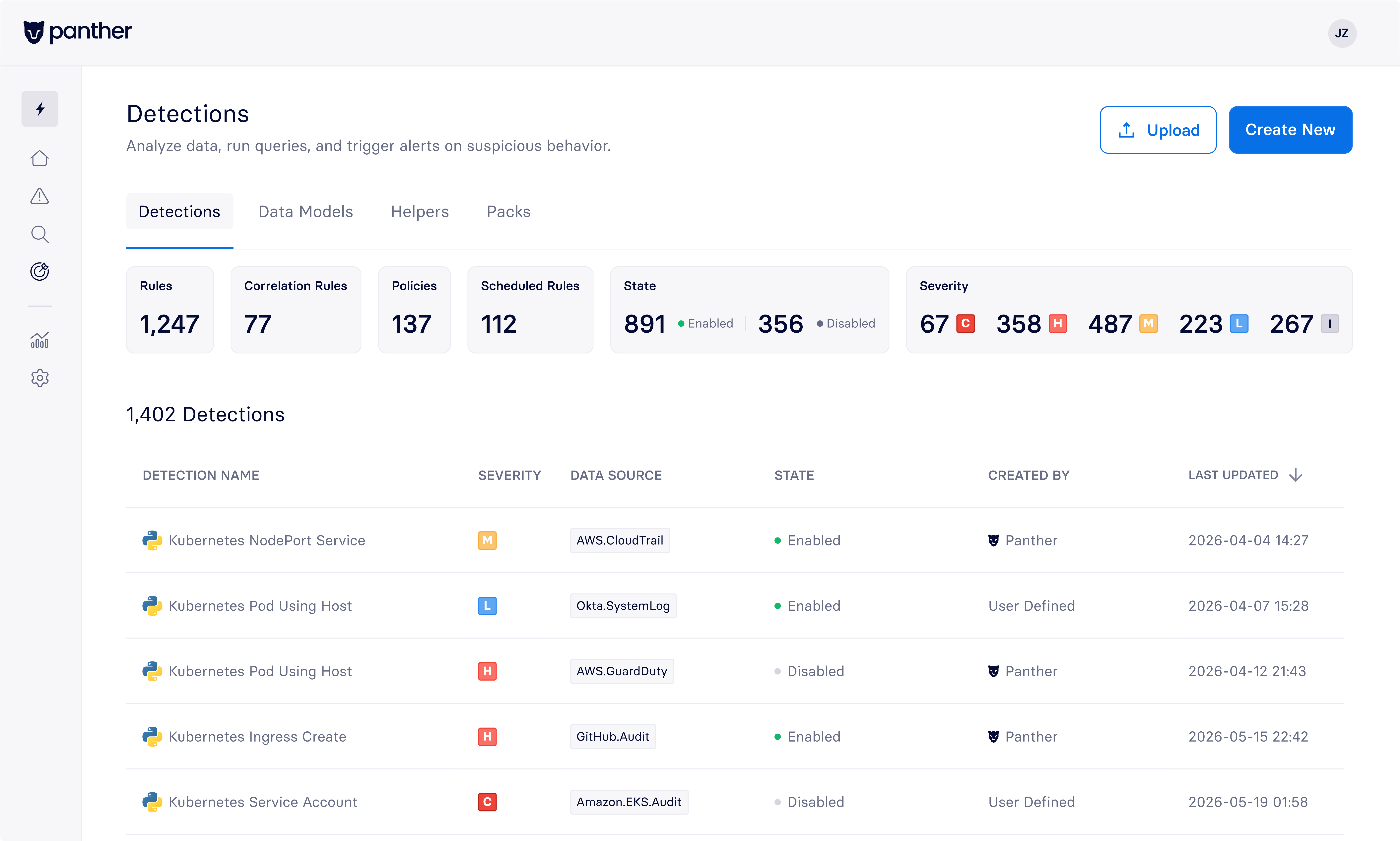
Native access to your detection logic means every triage outcome feeds back into the rules that fire.
Trusted by top security teams






AI-generated detection rules. Describe a threat in natural language and get a complete rule with filters, dynamic severity, and test cases.
AI-generated detection rules. Describe a threat in natural language and get a complete rule with filters, dynamic severity, and test cases.

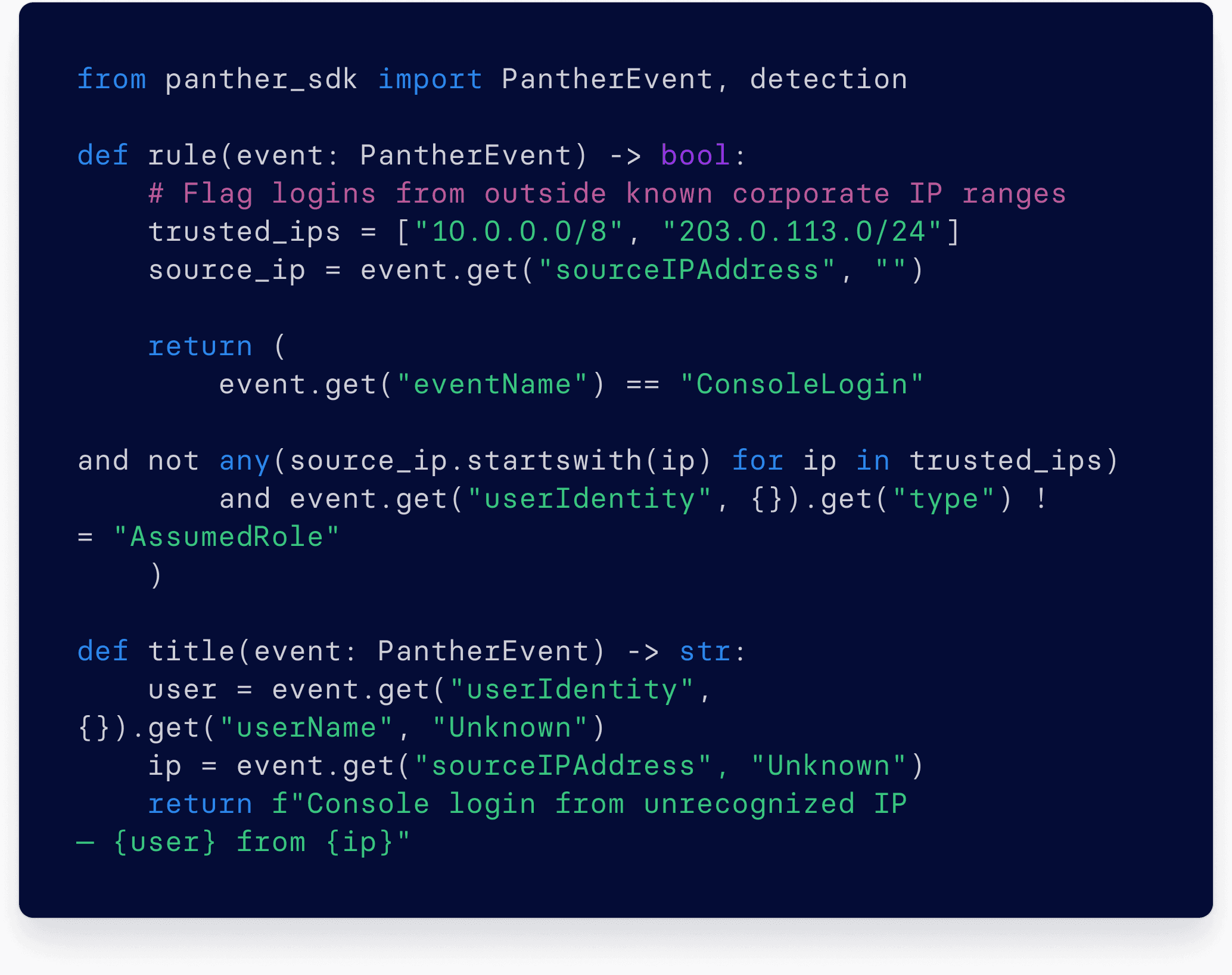
Detection-as-code. Write, test, and version detections in Python with full CI/CD and code review through GitHub.
Detection-as-code. Write, test, and version detections in Python with full CI/CD and code review through GitHub.

Closed-loop tuning. Every triage outcome traces back to the detection that fired it. AI proposes fixes through your existing GitHub workflow.
Closed-loop tuning. Every triage outcome traces back to the detection that fired it. AI proposes fixes through your existing GitHub workflow.
Compounding Intelligence
Alert quality improves automatically as your team works
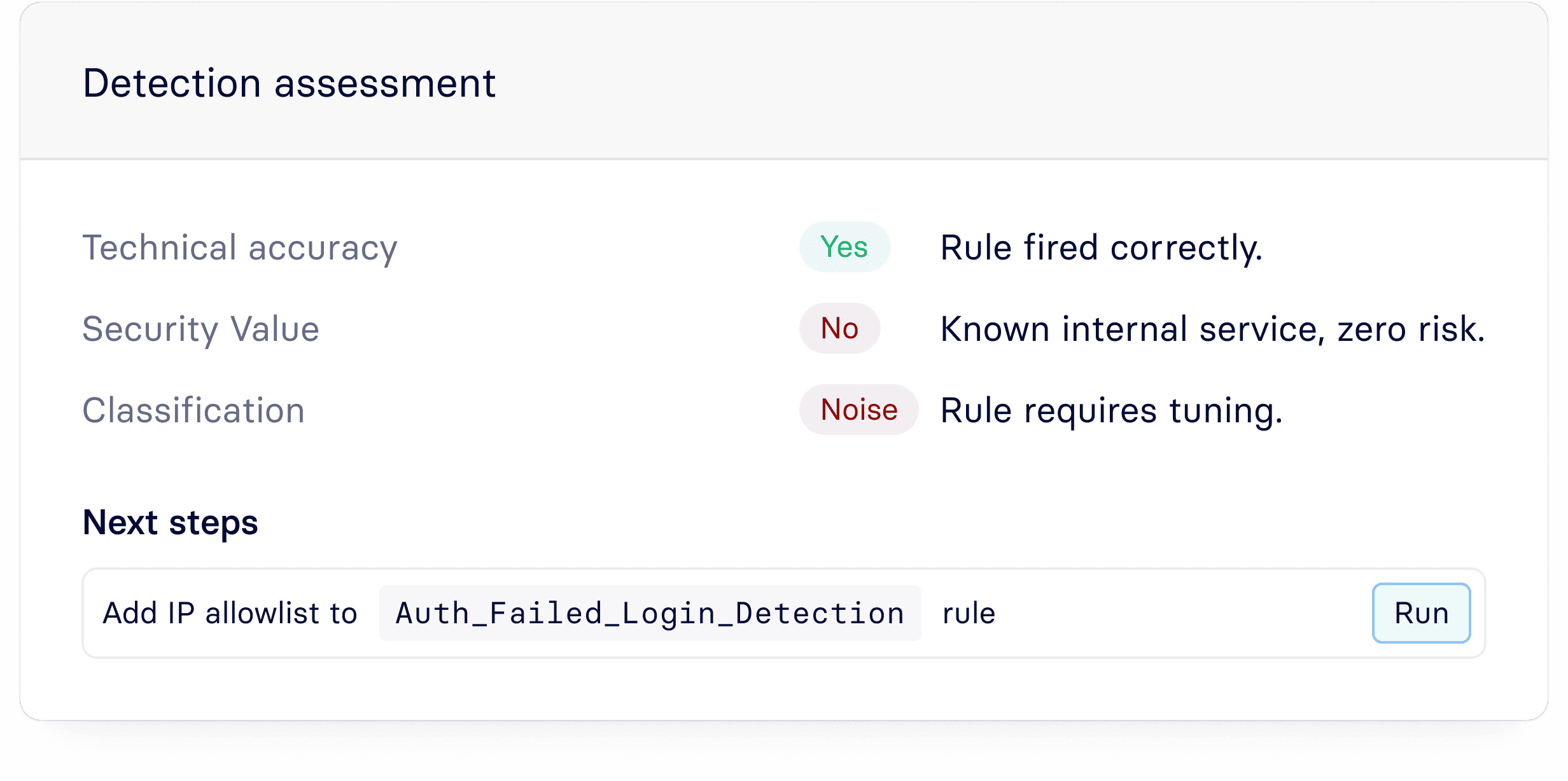
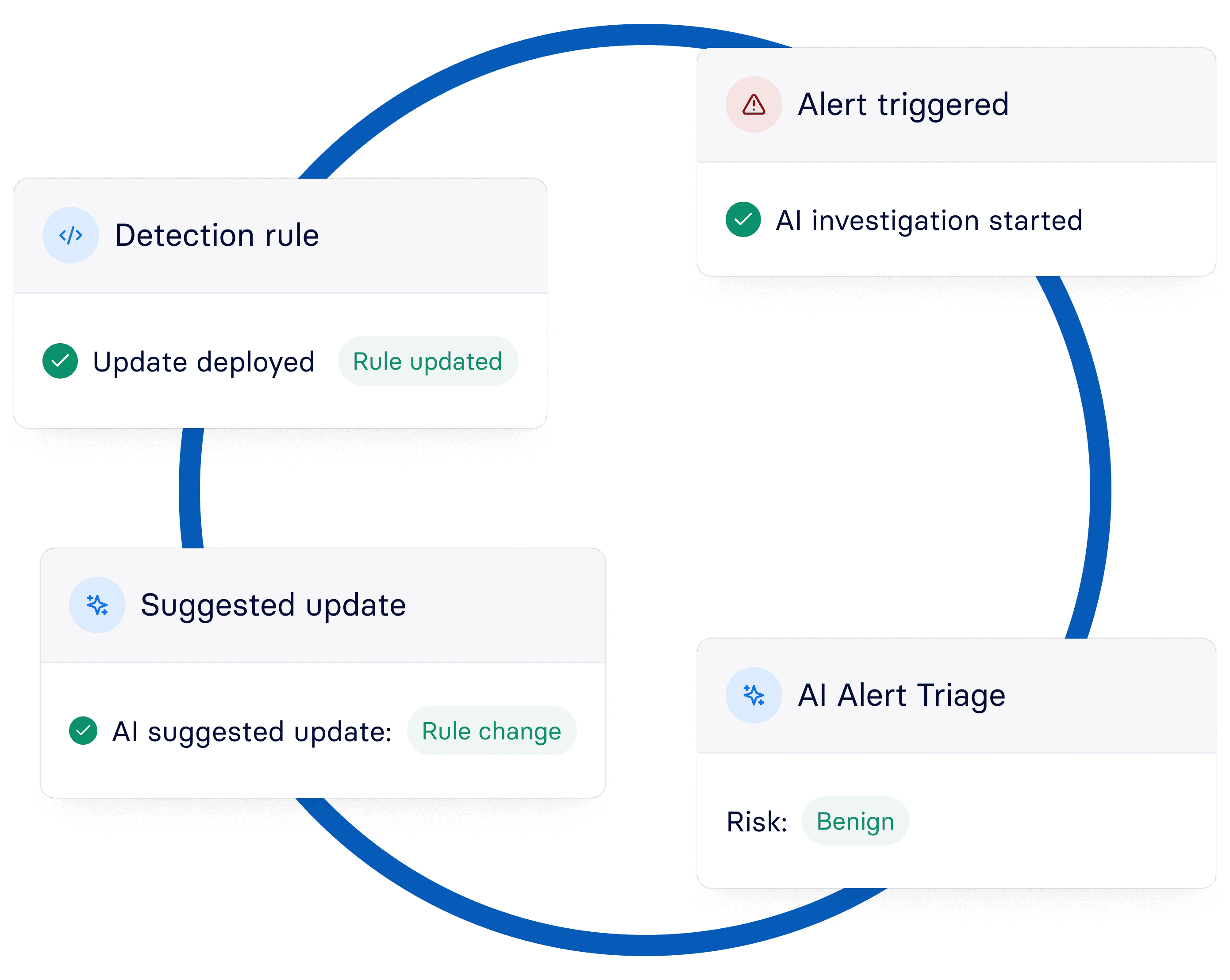
When an alert resolves as a false positive, AI traces it to the source rule and proposes a fix via GitHub pull request. Your team reviews and approves it. The same false positive doesn't come back.
Proactive Coverage
Build detections from threat descriptions, not just known patterns
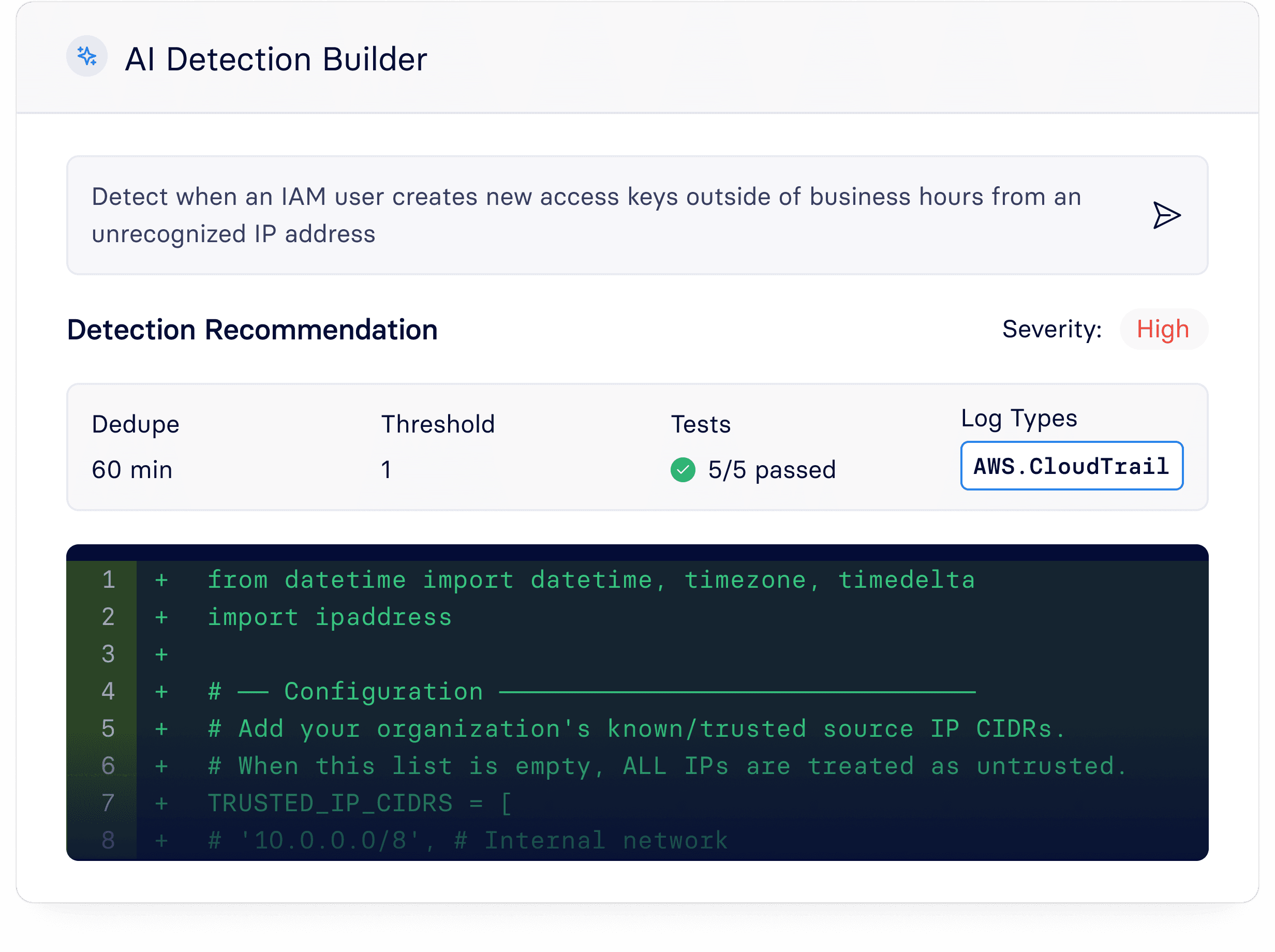
Detection coverage is limited by how many rules someone had time to write. Describe a threat behavior in natural language and Panther generates a complete Python detection with filters, dynamic severity, and test cases.

Complete Context
Agents read and modify your detection logic because it lives in code
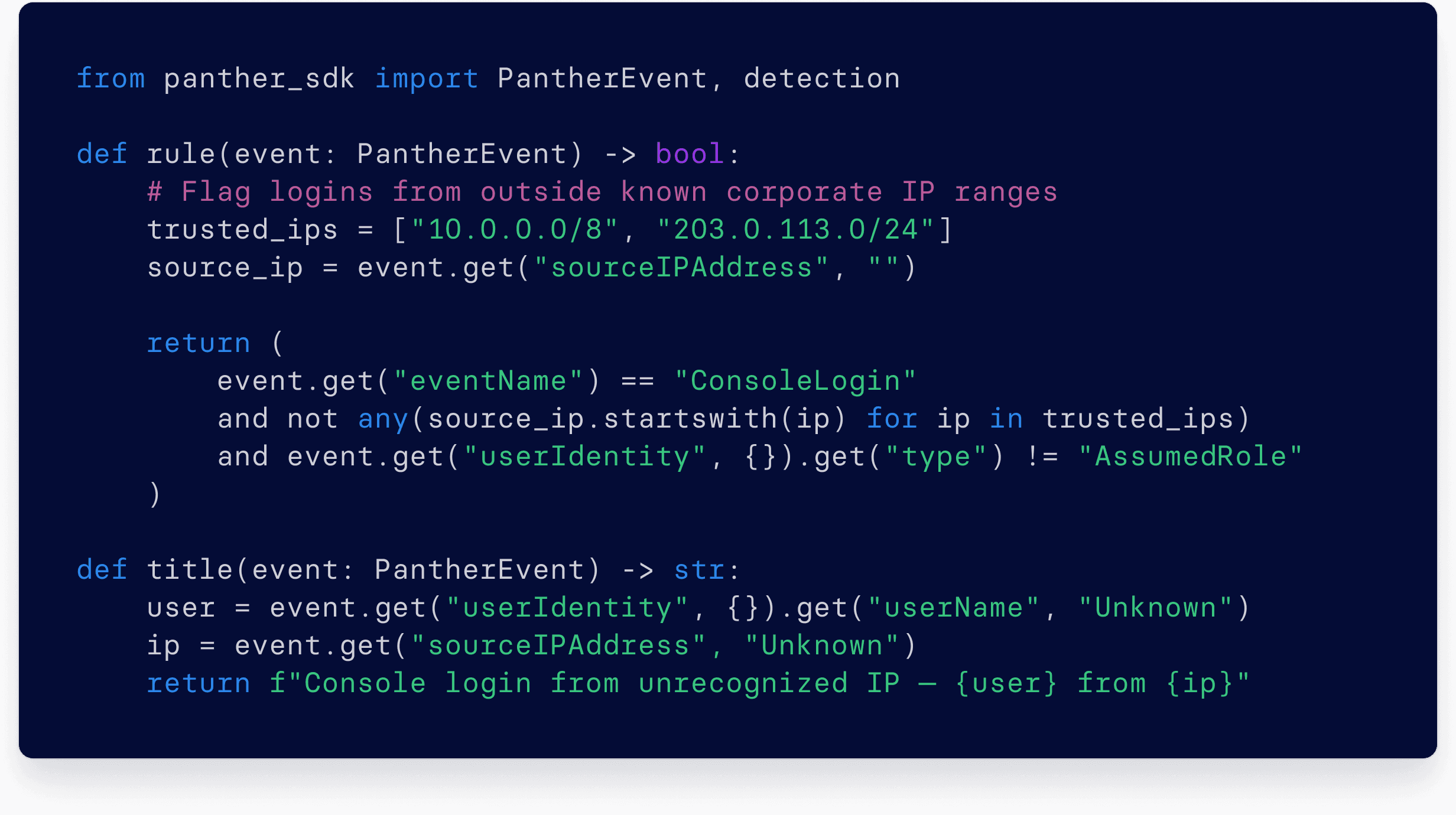
Because detections are structured Python with version control, agents can read exactly why an alert fired and write a specific fix rather than a general recommendation.

Autonomous Action
Detection improvements ship through the same review process as your code
Detection engineers stay in control of what fires and why. The role shifts from writing every rule manually to reviewing AI-proposed improvements: same quality bar, fraction of the effort.

How it works
How it works
AI rule generation
Detection-as-code
Alert quality loop
GitHub PR workflow
Exploratory detections
AI rule generation
Describe a threat scenario or known TTP and Panther produces a complete Python detection with filters, dynamic severity logic, and test cases.
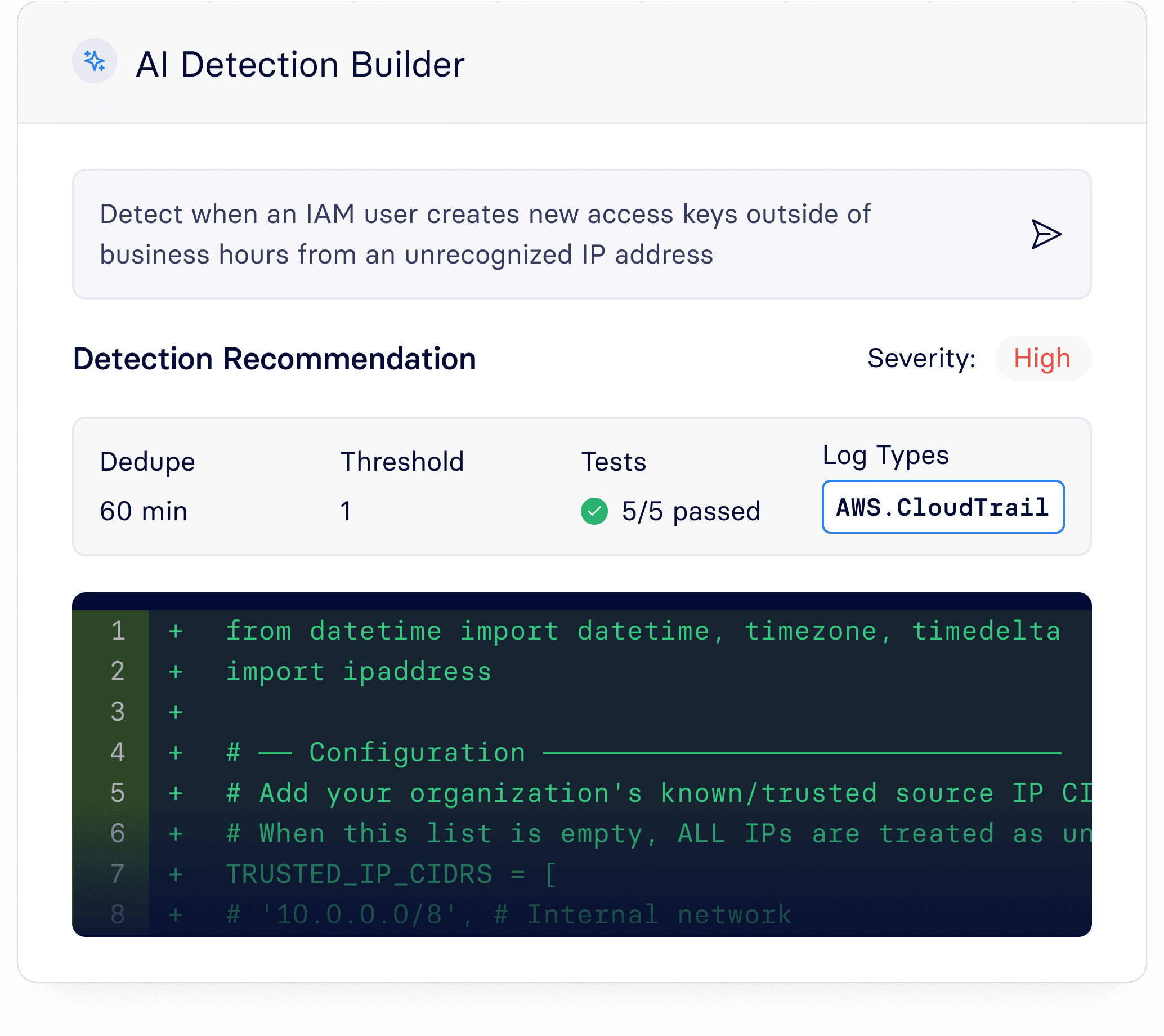

AI rule generation
Describe a threat scenario or known TTP and Panther produces a complete Python detection with filters, dynamic severity logic, and test cases.
Detection-as-code
Write rules using the same practices you use for application code: version control, peer review, CI/CD, and automated testing. No proprietary query language. No detection library locked in vendor infrastructure.
Alert quality loop
When an analyst triages a false positive, Panther identifies the rule that generated it and evaluates whether the logic can be refined. Accuracy improves automatically over time.
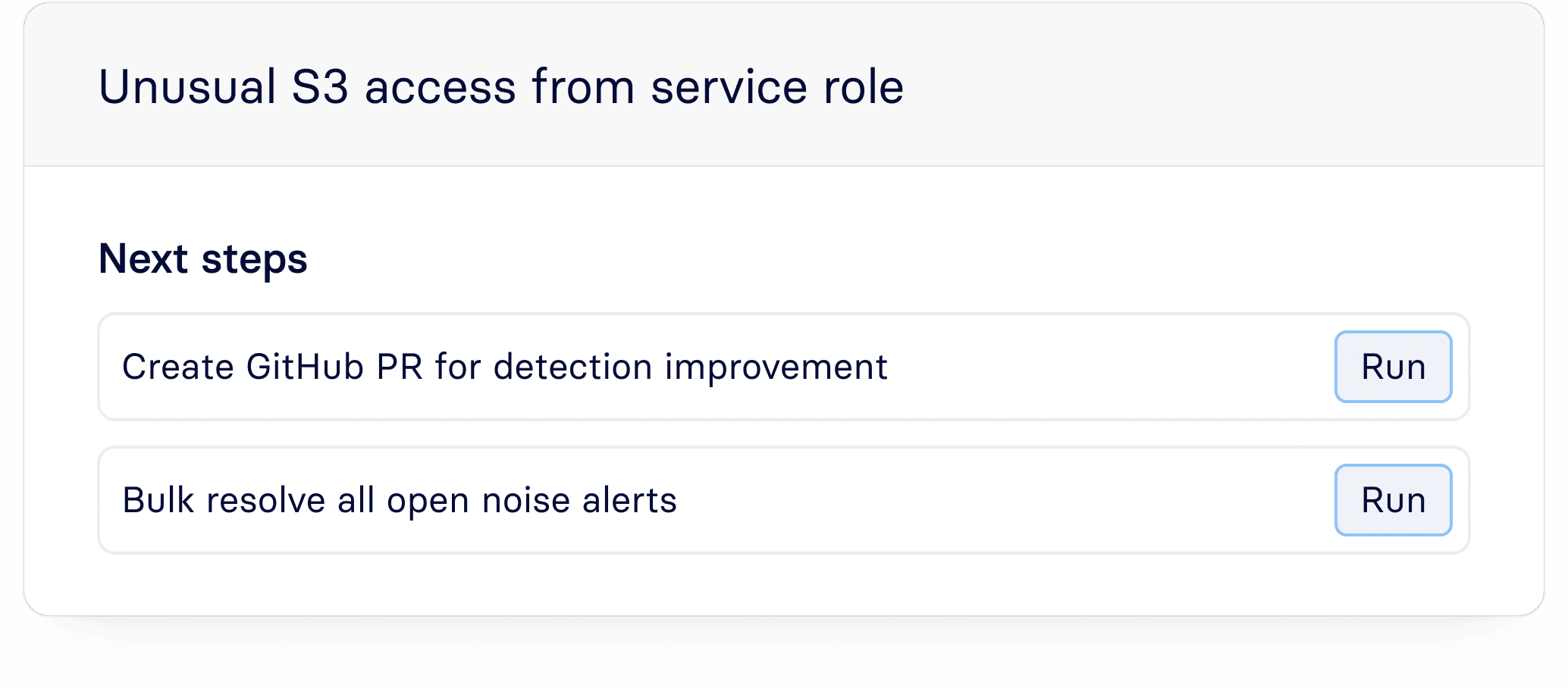
GitHub PR workflow
AI-proposed detection changes appear as pull requests with unit tests, a plain-language explanation, and diff view. Nothing deploys without your approval.
Exploratory detections
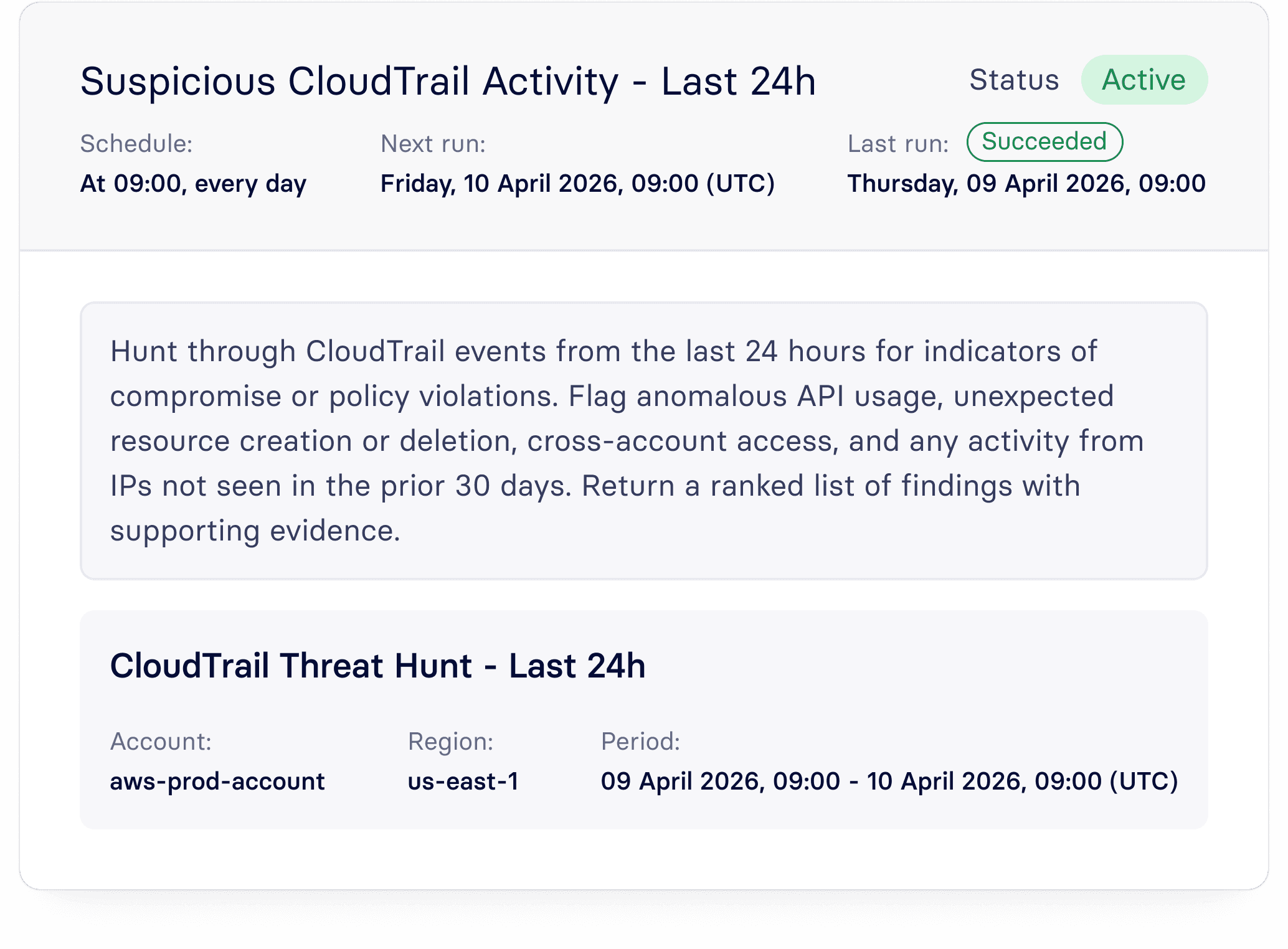
Analyze broad datasets to surface suspicious patterns before a rule exists for them. Scheduled runs extend this into continuous threat hunting.
Tealium cut detection creation time from 4–5 hours to 10 minutes. That's the alert quality loop in production.
Proof from teams
who’ve been there.
Proof from teams
who’ve been there.
85%
Reduction in total alert volume

85%
Reduction in total alert volume
“When you look at the thinking steps of the AI in the platform, it's doing all of the things that a sophisticated engineer would do on their best day, and it's doing that on every alert, every time, 24 hours a day, no fatigue.”

“When you look at the thinking steps of the AI in the platform, it's doing all of the things that a sophisticated engineer would do on their best day, and it's doing that on every alert, every time, 24 hours a day, no fatigue.”
85%
Reduction in false positives

85%
Reduction in false positives
70%
Faster detection tuning

70%
Faster detection tuning
85%
Reduction in total alert volume
“When you look at the thinking steps of the AI in the platform, it's doing all of the things that a sophisticated engineer would do on their best day, and it's doing that on every alert, every time, 24 hours a day, no fatigue.”
85%
Reduction in false positives
70%
Faster detection tuning
Learn more about Panther
Learn more about Panther


Explore the Platform


Alert Triage & Automation
Panther doesn't summarize alerts and wait for instructions — it investigates.


Detection Engine
Native access to your detection logic means every triage outcome feeds back into the rules that fire.


AI SOC Agent
An agent that runs on a schedule, responds to natural language queries, and takes action with complete context.


Analytics & Reporting
Built-in dashboards and MITRE ATT&CK mapping, from alert trends to program maturity.


Data Pipeline
All your security data, in one place.
Explore the Platform
Alert Triage & Automation
Panther doesn't summarize alerts and wait for instructions — it investigates.
Detection Engine
Native access to your detection logic means every triage outcome feeds back into the rules that fire.
AI SOC Agent
An agent that runs on a schedule, responds to natural language queries, and takes action with complete context.
Analytics & Reporting
Built-in dashboards and MITRE ATT&CK mapping, from alert trends to program maturity.
Data Pipeline
All your security data, in one place.
Explore the Platform
Alert Triage & Automation
Panther doesn't summarize alerts and wait for instructions — it investigates.
Detection Engine
Native access to your detection logic means every triage outcome feeds back into the rules that fire.
AI SOC Agent
An agent that runs on a schedule, responds to natural language queries, and takes action with complete context.
Analytics & Reporting
Built-in dashboards and MITRE ATT&CK mapping, from alert trends to program maturity.
Data Pipeline
All your security data, in one place.
Explore the Platform
Alert Triage & Automation
Panther doesn't summarize alerts and wait for instructions — it investigates.
Detection Engine
Native access to your detection logic means every triage outcome feeds back into the rules that fire.
AI SOC Agent
An agent that runs on a schedule, responds to natural language queries, and takes action with complete context.
Analytics & Reporting
Built-in dashboards and MITRE ATT&CK mapping, from alert trends to program maturity.
Data Pipeline
All your security data, in one place.

Frequently asked questions
Why does using Python for detections give AI agents better access to detection logic than proprietary query languages?
Large language models work well with Python. They can read a detection rule, understand its logic, identify why it fires, and write a specific modification. Proprietary query languages like Splunk's SPL or CrowdStrike's CQL are not structured in ways LLMs parse reliably, which is why AI features built on top of legacy SIEMs tend to offer general recommendations rather than specific code changes. Panther's detection-as-code foundation is what makes it possible for the AI agent to propose a precise fix to a specific rule rather than generic tuning advice.
Why does using Python for detections give AI agents better access to detection logic than proprietary query languages?
Large language models work well with Python. They can read a detection rule, understand its logic, identify why it fires, and write a specific modification. Proprietary query languages like Splunk's SPL or CrowdStrike's CQL are not structured in ways LLMs parse reliably, which is why AI features built on top of legacy SIEMs tend to offer general recommendations rather than specific code changes. Panther's detection-as-code foundation is what makes it possible for the AI agent to propose a precise fix to a specific rule rather than generic tuning advice.
Can detection engineers maintain control over what Panther's AI proposes and deploys?
Yes, and that control is structural rather than just a setting. Nothing in Panther's detection engine deploys without human approval. AI-generated rules and AI-proposed tuning changes are both presented as reviewable code through GitHub. Detection engineers see exactly what the AI wants to change, why, and what the test coverage looks like. The role shifts from writing every rule manually to reviewing a queue of AI-proposed changes, but the approval gate stays with the engineer.
Can detection engineers maintain control over what Panther's AI proposes and deploys?
Yes, and that control is structural rather than just a setting. Nothing in Panther's detection engine deploys without human approval. AI-generated rules and AI-proposed tuning changes are both presented as reviewable code through GitHub. Detection engineers see exactly what the AI wants to change, why, and what the test coverage looks like. The role shifts from writing every rule manually to reviewing a queue of AI-proposed changes, but the approval gate stays with the engineer.
What are exploratory detections, and how do they differ from standard detection rules?
Standard detection rules fire when known patterns match. Exploratory detections work the other way: they analyze broad datasets to surface suspicious activity that no pre-written rule would have caught. Rather than waiting for a pattern to be identified and codified into a rule, exploratory detections run scheduled analyses across your data lake and return findings for review. They extend detection coverage into unknown threat territory and feed into Scheduled Prompts for continuous threat hunting.
What are exploratory detections, and how do they differ from standard detection rules?
Standard detection rules fire when known patterns match. Exploratory detections work the other way: they analyze broad datasets to surface suspicious activity that no pre-written rule would have caught. Rather than waiting for a pattern to be identified and codified into a rule, exploratory detections run scheduled analyses across your data lake and return findings for review. They extend detection coverage into unknown threat territory and feed into Scheduled Prompts for continuous threat hunting.
How does the GitHub PR workflow for detection improvements work?
AI-proposed detection changes appear in your existing GitHub repository as pull requests, formatted the same way a detection engineer would submit code: a diff, an explanation of what changed and why, and automated test results. Nothing deploys without a human reviewing and approving the change. For teams already using GitHub for detection management, the workflow fits into existing code review practices rather than requiring a new process.
How does the GitHub PR workflow for detection improvements work?
AI-proposed detection changes appear in your existing GitHub repository as pull requests, formatted the same way a detection engineer would submit code: a diff, an explanation of what changed and why, and automated test results. Nothing deploys without a human reviewing and approving the change. For teams already using GitHub for detection management, the workflow fits into existing code review practices rather than requiring a new process.
What is the alert quality loop, and how does it reduce false positives over time?
When an analyst triages an alert as a false positive, Panther traces the outcome back to the specific Python rule that fired it and evaluates whether the detection logic can be refined. If it can, the system proposes a fix as a GitHub pull request with a plain-language explanation, a diff, and unit tests. The same false positive pattern stops recurring once the change is approved. Docker reduced false positives by 85% and Infoblox cut detection tuning time by 70% using this loop.
What is the alert quality loop, and how does it reduce false positives over time?
When an analyst triages an alert as a false positive, Panther traces the outcome back to the specific Python rule that fired it and evaluates whether the detection logic can be refined. If it can, the system proposes a fix as a GitHub pull request with a plain-language explanation, a diff, and unit tests. The same false positive pattern stops recurring once the change is approved. Docker reduced false positives by 85% and Infoblox cut detection tuning time by 70% using this loop.
How does Panther's AI rule generation work?
You describe a threat scenario or known TTP in natural language and Panther generates a complete Python detection rule with filters, dynamic severity logic, and unit tests included. The output is reviewable code, not a black-box configuration. Detection engineers can edit, extend, or reject the generated rule before it goes anywhere. Tealium reduced detection creation time from 4 to 5 hours per rule down to 10 minutes using this workflow.
How does Panther's AI rule generation work?
You describe a threat scenario or known TTP in natural language and Panther generates a complete Python detection rule with filters, dynamic severity logic, and unit tests included. The output is reviewable code, not a black-box configuration. Detection engineers can edit, extend, or reject the generated rule before it goes anywhere. Tealium reduced detection creation time from 4 to 5 hours per rule down to 10 minutes using this workflow.
What is detection-as-code, and why does it matter for a modern security team?
Detection-as-code means writing security detection rules as version-controlled code rather than configuring them through a GUI or proprietary query interface. In Panther, detections are written in Python — stored in GitHub, reviewed through pull requests, tested via CI/CD, and deployed the same way your engineering team ships software. The practical consequence is that your detection library has history, accountability, and testability built in, and AI agents can read and modify the rules because the logic is structured and parseable, not locked in vendor infrastructure.
What is detection-as-code, and why does it matter for a modern security team?
Detection-as-code means writing security detection rules as version-controlled code rather than configuring them through a GUI or proprietary query interface. In Panther, detections are written in Python — stored in GitHub, reviewed through pull requests, tested via CI/CD, and deployed the same way your engineering team ships software. The practical consequence is that your detection library has history, accountability, and testability built in, and AI agents can read and modify the rules because the logic is structured and parseable, not locked in vendor infrastructure.
Bolt-on AI closes alerts. Panther closes the loop.
See how Panther compounds intelligence across the SOC.

Bolt-on AI closes alerts. Panther closes the loop.
See how Panther compounds intelligence across the SOC.
Bolt-on AI closes alerts. Panther closes the loop.
See how Panther compounds intelligence across the SOC.
Bolt-on AI closes alerts. Panther closes the loop.
See how Panther compounds intelligence across the SOC.



Detect, investigate, and respond to threats at cloud scale — powered by code and AI.
Platform
Solutions
All rights reserved © 2026 Panther, Inc
Detect, investigate, and respond to threats at cloud scale — powered by code and AI.
Platform
All rights reserved © 2026 Panther, Inc
Detect, investigate, and respond to threats at cloud scale — powered by code and AI.
Platform
All rights reserved © 2026 Panther, Inc